

hero background shape
customer-success_02_hero
Use Case

Triage Customer Support Calls


Time to resolution for customer support calls is an important metric in optimizing call center performance. Through predictive modeling, customer service teams can estimate how long individual calls will take and assign them according to the availability of representatives.

Efficiency Gains

Automatically route calls to appropriate reps based on difficulty, type of call, geographic and demographic data, and employee availability

Bottom-Line Returns

Continually report and optimize call center performance automatically

Customer Experience

Affect time to resolution and customer sentiment and fully address customer needs


Business Problem

The Time to Resolution (TTR) metric is front and center for most customer support teams. It measures the amount of time that elapses from the moment a support case arrives in the customer support queue until the case has been resolved. At intake, an administrator assesses the case, measures the workload of support representatives, and assigns the case to the representative best qualified to solve the case in the shortest time. It no longer suffices to manage support cases with spreadsheets and anecdotal data. Nor is it best practice to let a phone queue or email inbox treat all cases on a first-come, first-served basis. Growing companies face customers with rising expectations for prompt, authoritative, speedy support. Traditional ways of performing triage on customer support inquiries are too slow and unreliable, putting the customer experience in jeopardy.

Analytics Solution

A company can accelerate and improve triage by using a predictive model to reduce TTR. The model is an application of augmented machine learning that bases predictions about TTR on historical case data. The predictions take the availability of each support representative into account and determine which one will be most likely to resolve the issue quickly. The more data the company has available for training the model, the more accurate the resulting predictions. Sample workflows include steps for initially preparing data, generating and appending additional variables, removing outliers, imputing data, and testing. Through machine learning, the model shifts the labor-intensive component of vetting cases off of humans and onto computing resources. It gets inquiries into the hands of customer support representatives promptly, reducing overall TTR and ultimately providing quicker and higher-quality service.

With Alteryx, you can:
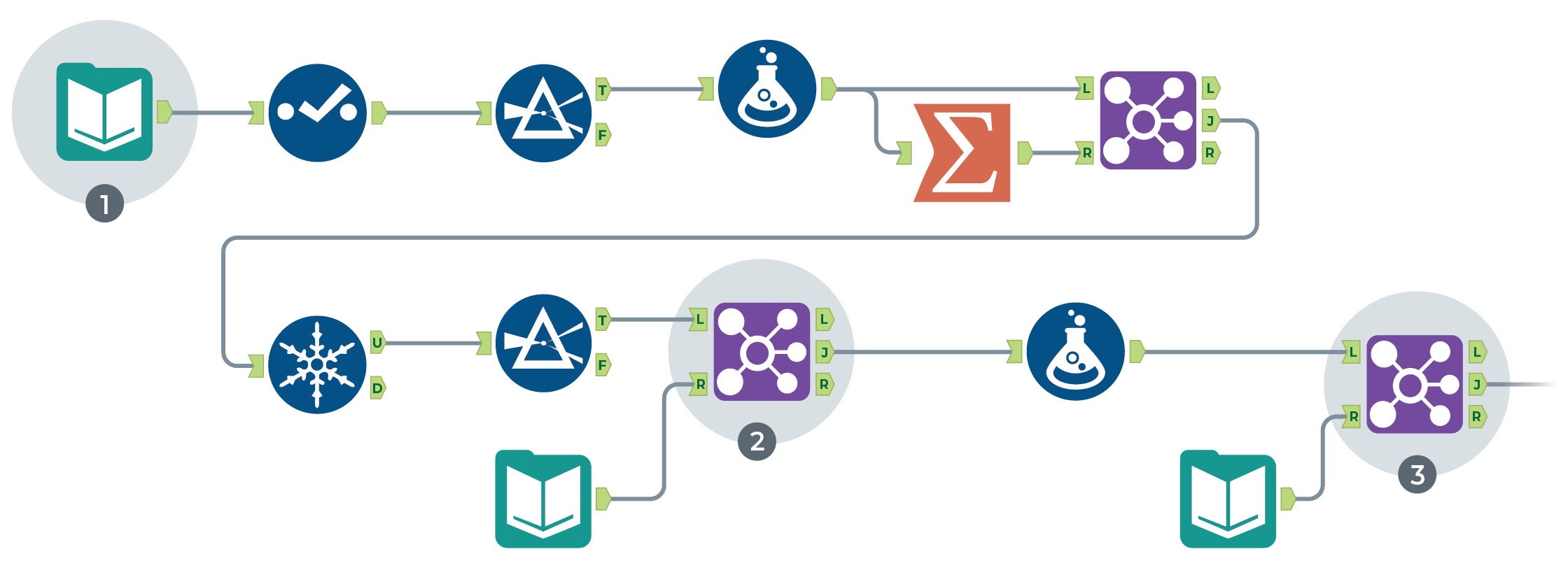
  • Use Input Data tool to load in historical customer support data or use a Connector to automatically pull in data
  • Automate joining and blending of data, including engineering new features to load into Alteryx Intelligence Suite tools for advanced analytics
  • Connect created models to customer support platforms, or feed into Tableau dashboards for historical and predictive customer support visualizations
 

1 – Data Connection

Data Connection: Combine historical customer support data and customer demographic data

2 – Prep & Blend

Combine data from various sources and prepare data for analytics

3 – Advanced Analytics

Feed cleansed data into advanced analytic workflow modules or customer support platforms


Additional Resources


Starter Kit for Customer Analytics

Learn More


Starter Kit for Tableau

Learn More


Reduce Support Case Time to Resolution

Learn More


Call Center Analytics Predictive Modeling

Learn More


Customer Journey Analytics

Learn More
 

Recommended Resources

 
Use Case
Demand Forecasting
Empower finance teams to predict demand shifts faster and more accurately with explainable AI, automated workflows, and unified data across ERP, CRM, and planning systems.
  • Analytics Automation
  • Data Prep and Analytics
  • Data Science and Machine Learning
Learn More
 
Use Case
Fixed Asset Depreciation Automation
Tax teams replace spreadsheet-heavy depreciation work with governed, AI-supported automation that improves accuracy, speeds close cycles, and strengthens planning confidence.
  • Analytics Automation
  • Data Prep and Analytics
  • Data Science and Machine Learning
Learn More
 
Use Case
Transfer Pricing Automation
Automate and standardize transfer pricing workflows with governed data, repeatable logic, and clear audit documentation using Alteryx One.
  • Analytics Automation
  • Data Prep and Analytics
  • Data Science and Machine Learning
Learn More
 
Use Case
Dynamic Price Scenario Modeling
Finance teams simulate, compare, and update pricing strategies quickly by unifying cost, demand, and market inputs in one place. Automated workflows and AI-supported analysis help analysts refresh assumptions, run scenarios, and support timely pricing recommendations.
  • Analytics Automation
  • Data Prep and Analytics
  • Data Science and Machine Learning
Learn More
 
Use Case
Customer Segmentation
Unify CRM, donation, and marketing data into governed, AI-ready segments. Automate modeling, ensure compliance, and activate insights across campaigns to boost ROI and retention.
  • Data Prep and Analytics
  • Data Science and Machine Learning
  • Generative AI
Learn More
 
Use Case
Supply Chain Cost Optimization
Lower cost-to-serve by aligning supply chain planning with financial targets. Alteryx One combines operational data, forecast inputs, and cost models in one governed environment, enabling teams to build scenarios, test constraints, and compare outcomes to cut spend and increase transparency.
  • Analytics Automation
  • Data Prep and Analytics
  • Data Science and Machine Learning
Learn More